NEWS
New Mexico Makes History: First State in the Nation to Clarify Coverage for Wheelchairs for Physical Activity through Complex Rehab Technology Coverage
By Kyle Stepp
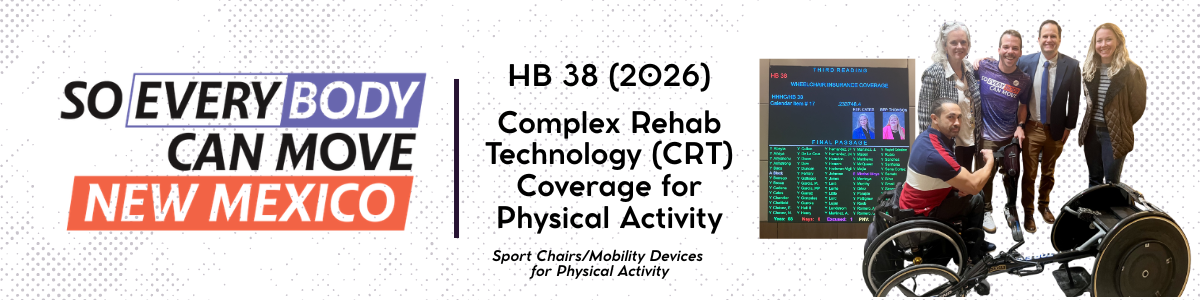
New Mexico Makes History: First State in the Nation to Clarify Coverage for Wheelchairs for Physical Activity
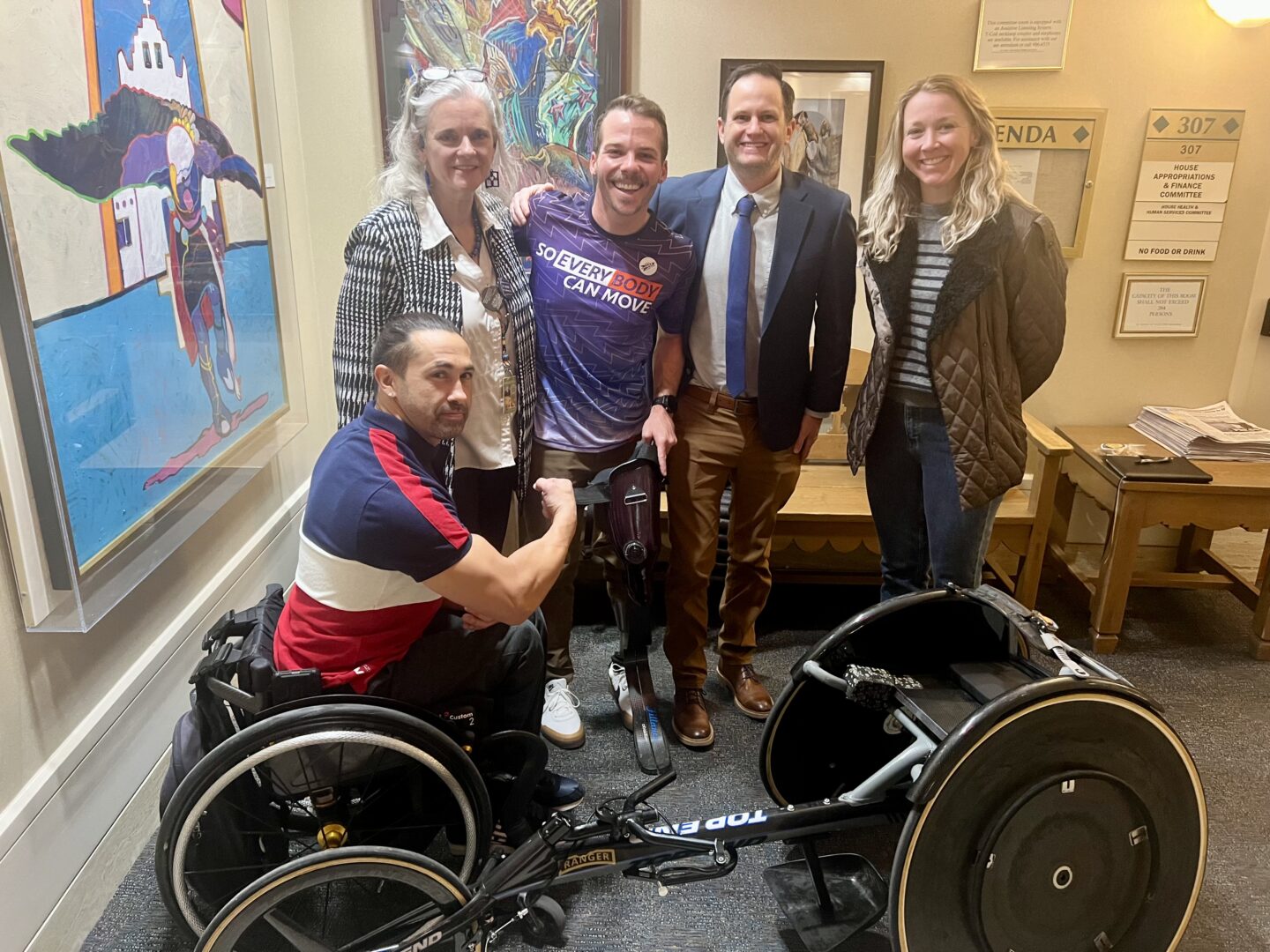
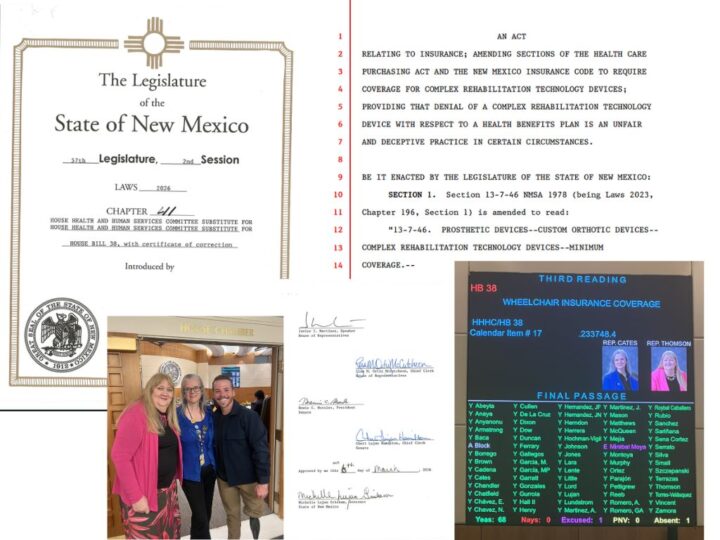
When New Mexico’s House Bill – HB 38 (2026) was signed into law this spring by Governor Michelle Lujan Grisham, it did something no state had done before: it clarified that Complex Rehab Technology (CRT) — including sport chairs and other mobility devices for physical activity — must be covered as medically necessary care.
For the limb loss, limb difference, and greater physical disability community, this is a landmark moment. SEBCM’s long-term vision has always been that every person with a physical disability deserves access to the devices they need to be physically active — including community members who use wheelchairs and other mobility devices.
New Mexico just became the first state in the country to make that vision law.
What HB 38 does:
HB 38 (2026), sponsored by Rep. Kathleen Cates and Rep. Liz Thomson and led by State Lead Kyle Stepp, builds on New Mexico’s existing SEBCM law HB 131 from 2023 — which already guaranteed coverage for prosthetic and orthotic devices for daily living, work-related activities, and physical activity for all ages. HB 38 adds two significant clarifications:
-
Wheelchairs and mobility devices for physical activity
— through Complex Rehab Technology (CRT) coverage, now required under state-regulated individual and employer-sponsored fully insured commercial plans and state employee plans. (Medicaid coverage is advancing through a separate regulatory process.)
-
Showering and bathing devices
— coverage for prosthetic and orthotic devices for showering and bathing, following the paths blazed by Minnesota and Arkansas.
Why states lead the way:
One reason SEBCM pursues state-by-state legislation is that states function as laboratories for policy innovation. Each state has the autonomy to test different levels of coverage, different plan types, and different approaches — building the evidence and momentum for federal reform. New Mexico’s CRT model is exactly that: a proof of concept for the rest of the country.
Getting there required more than a good bill. The New Mexico coalition, led by Kyle Stepp, built deliberate relationships across every stakeholder who would need to say yes — from the Superintendent of Insurance and major health plans, including Blue Cross Blue Shield of New Mexico and Presbyterian Health Plan, to the Director of Medicaid and the Healthcare Authority overseeing state employee plans.
Alongside that, the coalition cultivated key relationships with House and Senate leadership in committee and on the floor. That kind of groundwork — months of trust-building before a single vote is cast — is what turns good legislation into enacted law.
This milestone was also made possible through collaboration with the National Coalition for Assistive & Rehab Technology (NCART), whose expertise in Complex Rehab Technology helped shape what coverage should look like in practice. We’re also grateful to the SEBCM Missouri coalition, led by Deborah Graham, which included CRT coverage in their own bill this session.
While HB 2034 didn’t cross the finish line in 2026, it earned unanimous committee support — and Missouri’s leadership helped lay the groundwork for what New Mexico was able to achieve. Missouri is coming back next session, and they’ll be stronger for it. That kind of cross-state solidarity is how this movement builds. Together, these coalitions are creating a replicable model that other states can follow.
That kind of cross-state solidarity is how this movement builds. Together, these coalitions are creating a replicable model that other states can follow.
New Mexico has now come back to strengthen its law twice. What started with HB 131 in 2023 has grown — session by session — into one of the most comprehensive SEBCM laws in the country. That’s not incremental progress. That’s a strategy working.